

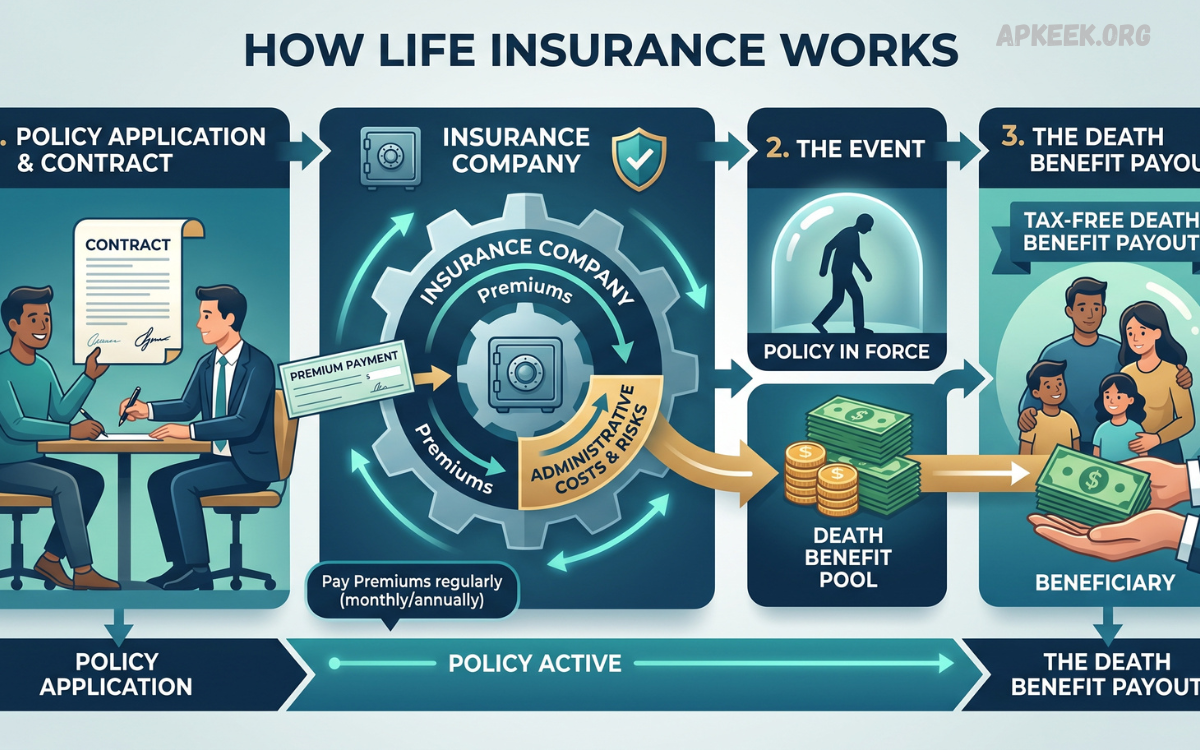
Life insurance is an important financial protection tool that provides financial support to your family or chosen beneficiaries after your death. It can help replace lost income, manage outstanding debts, cover household expenses, and protect long-term financial plans.
Understanding how life insurance works can make it easier to choose suitable coverage. A policy generally involves paying premiums to an insurance company in exchange for a death benefit that is paid to eligible beneficiaries when the insured person passes away, subject to the policy terms.
What Is Life Insurance?
Life insurance is a contract between an individual and an insurance company. The policyholder agrees to pay premiums according to the selected payment schedule, while the insurer promises to provide a specified financial benefit to beneficiaries when a covered death occurs.
Coverage amounts depend on the selected policy and the applicant’s circumstances. Factors such as age, health, lifestyle, income, policy duration, and coverage amount can influence eligibility and premium costs.
How Does Life Insurance Work?
When you buy life insurance, you choose a coverage amount and policy type based on your financial needs. The insurer may evaluate your age, health history, occupation, lifestyle, and other relevant information before approving the application.
Once the policy becomes active, you continue paying the required premiums. If the insured person dies while the policy is active and the claim meets the policy conditions, the insurance company generally pays the death benefit to the named beneficiaries.
Understanding Life Insurance Premiums
A premium is the amount paid to maintain life insurance coverage. Depending on the policy, you may pay premiums monthly, quarterly, annually, or on another schedule offered by the insurer.
Premium costs vary between individuals because insurers assess different risk factors. Age, health, tobacco use, occupation, coverage amount, policy duration, and the type of insurance can all affect the premium.
What Is a Life Insurance Death Benefit?
The death benefit is the amount the insurance company agrees to pay to eligible beneficiaries after a covered death. The policy documents specify the coverage amount and the circumstances under which the benefit is payable.
Beneficiaries can use the money for various financial needs. These may include everyday household expenses, mortgage or loan payments, education costs, funeral expenses, or other obligations depending on their circumstances and applicable policy terms.
Types of Life Insurance
Life insurance comes in several forms, with term life insurance and permanent life insurance as two major categories. Term life insurance generally provides protection for a specific period, such as a selected number of years.
Permanent life insurance is designed to provide coverage for a longer period, as long as the policy remains active. Some permanent policies may also include a cash value component, although features and costs differ significantly between policies.
Term Life Insurance Explained
Term life insurance provides coverage for a specified period. If the insured person dies during the covered term and the policy conditions are satisfied, beneficiaries may receive the stated death benefit.
People often consider this type of insurance for temporary financial responsibilities. For example, someone may want coverage while raising children, paying a mortgage, or building sufficient savings for long-term financial security.
Permanent Life Insurance Explained
Permanent life insurance is designed to remain in force for an extended period as long as the policy requirements are met. Certain permanent policies combine death benefit protection with a cash value feature.
Cash value policies can have additional costs, conditions, and financial implications. Policyholders should carefully review guarantees, fees, surrender provisions, and potential growth before choosing this type of coverage.
Who Needs Life Insurance?
Life insurance can be particularly relevant for people whose income or financial contributions are important to their household. Parents, spouses, business owners, and individuals supporting dependents may consider coverage as part of their financial planning.
It may also be useful when a person has significant financial obligations that could affect family members after their death. However, the appropriate amount and type of coverage depend on individual circumstances and financial goals.
How Much Life Insurance Coverage Do You Need?
Determining the right coverage amount involves considering income, debts, savings, future expenses, and beneficiaries’ financial needs. A common starting point is estimating how much money dependents would need to maintain their financial stability.
Consider major obligations such as housing costs, education expenses, personal loans, and ongoing household expenses. Also consider existing savings and other financial resources so the insurance amount reflects the actual financial gap.
Benefits of Life Insurance
One of the main benefits of life insurance is financial protection for beneficiaries. A death benefit can provide funds at a difficult time and help reduce the financial pressure created by the loss of an income provider.
Life insurance can also support long-term financial planning. Depending on the policy, it may help cover debts, education costs, business obligations, estate planning, and other financial responsibilities.
Life Insurance and Financial Security
Financial security is one of the primary reasons people consider life insurance. If a household depends on one or more incomes, the sudden loss of an income provider can create significant financial challenges.
A suitable policy can provide beneficiaries with financial resources after a covered death. This money can give families more flexibility to manage expenses and adjust to changes in their financial circumstances.
What Factors Affect Life Insurance Costs?
Insurance companies consider several factors when determining premiums. Age matters because the likelihood of certain health risks generally changes over time, and health history and lifestyle can also affect underwriting decisions.
Coverage amount and duration can also influence premiums. Larger coverage amounts may require higher premiums, while longer policy terms can also affect overall costs depending on the policy structure and insurer.
Read Also: Best Health Insurance Plans: Coverage, Benefits, and Key Considerations
Life Insurance Underwriting
Underwriting is the process an insurer uses to evaluate an application and determine the terms of coverage. The insurer may review information about health, age, occupation, lifestyle, and other relevant risk factors.
Some applications may involve medical questions, health records, or medical examinations, while others may use simplified underwriting. Requirements vary by insurer and policy type, so applicants should provide accurate information.
Choosing the Right Life Insurance Policy
Choosing life insurance starts with understanding your financial responsibilities and who depends on you. Consider why you need coverage, how long you may need protection, and how much financial support your beneficiaries might need.
Compare policy terms, premiums, exclusions, renewal provisions, guarantees, and other conditions before deciding. Reading the policy documents carefully can help you understand what is covered and what responsibilities you have as the policyholder.
Life Insurance Beneficiaries
A beneficiary is the person or organization designated to receive the policy’s death benefit when a valid claim is approved. Policyholders can generally name one or more beneficiaries, depending on the rules of the insurance provider.
Keeping beneficiary information updated is important because personal circumstances can change. Marriage, divorce, the birth of children, or other major life events may make it appropriate to review beneficiary designations.
What Happens When a Life Insurance Claim Is Made?
After the insured person’s death, beneficiaries or another authorized party generally submit a claim to the insurance company. Required documents may include a death certificate and other information the insurer requests.
The insurance company reviews the claim against the policy terms and available documentation. If the claim is approved, the insurer pays the death benefit according to the policy and applicable requirements.
Common Life Insurance Exclusions
Life insurance policies can contain exclusions that limit or restrict coverage in specific circumstances. These exclusions vary by insurer, policy type, jurisdiction, and contract terms.
Applicants should carefully review exclusions and other policy conditions before purchasing coverage. Understanding these provisions can help prevent misunderstandings about when a death benefit may or may not be payable.
When Should You Buy Life Insurance?
The appropriate time to purchase life insurance depends on personal circumstances rather than a single age or financial milestone. People with dependents, significant debts, or long-term financial responsibilities may consider coverage earlier in their financial planning.
Starting coverage when financial responsibilities arise can help ensure that protection is available when it is needed. However, the decision should reflect affordability, existing assets, and the insurance’s specific purpose.
Life Insurance for Families
Families often consider life insurance to protect household finances if a parent or income provider dies. The death benefit may help cover living costs, education expenses, housing obligations, and other financial responsibilities.
Parents may also consider how their children would be financially supported in the future. A carefully selected policy can form part of a broader financial plan alongside savings, investments, retirement planning, and emergency funds.
Life Insurance for Business Owners
Business owners may use life insurance as part of business continuity and financial planning. Coverage can potentially provide funds that help address certain business-related financial obligations following the death of an owner or key individual.
Some businesses use specialized arrangements involving multiple parties and contractual agreements. Because business insurance can involve legal, tax, and ownership considerations, professional advice may be appropriate before establishing a policy.
Tips for Managing a Life Insurance Policy
After purchasing life insurance, review your policy regularly to ensure the coverage still reflects your financial situation. Changes in income, debt, family responsibilities, and financial goals can affect your insurance needs.
Keep policy documents and beneficiary information accessible to the appropriate people. Pay premiums on time and contact the insurer when your personal information or circumstances change.
Common Life Insurance Mistakes to Avoid
One common mistake is purchasing too little coverage without considering future financial obligations. Another is selecting a policy without understanding its exclusions, premium structure, duration, renewal conditions, or other important terms.
Failing to update beneficiaries can also create complications. Policyholders should review their insurance arrangements periodically and make updates when major life circumstances change.
Frequently Asked Questions
How does life insurance work?
Life insurance works through a contract between an insurance company and a policyholder. The policyholder pays premiums, and if the insured person dies while eligible coverage is active, the insurer generally pays the stated death benefit to the named beneficiaries.
What is the main purpose of life insurance?
The main purpose is to provide financial protection to beneficiaries after the insured person’s death. The benefit can help address income replacement, debts, living expenses, education costs, and other financial responsibilities.
Is life insurance worth having?
Whether life insurance is appropriate depends on personal circumstances, financial responsibilities, dependents, existing assets, and long-term goals. People who have others relying on their income may have a stronger reason to consider financial protection.
What is the difference between term and permanent life insurance?
Term life insurance generally provides coverage for a specified period, while permanent life insurance is designed for longer-term coverage. Permanent policies may also include cash value features depending on the policy type.
Does life insurance cover every type of death?
Not necessarily. Coverage depends on the policy contract, exclusions, limitations, and applicable laws. Policyholders should read their specific policy documents to understand circumstances that may affect a claim.
How are life insurance premiums determined?
Premiums can depend on factors such as age, health, lifestyle, coverage amount, policy duration, occupation, and the type of insurance. Each insurer may use its own underwriting process and pricing structure.
Who can receive a life insurance death benefit?
The death benefit is generally paid to the beneficiaries named in the policy, provided the claim is valid under the contract. Beneficiary rules can vary depending on the policy and applicable regulations.
Can life insurance beneficiaries be changed?
In many policies, beneficiaries can be changed by the policyholder, although specific rules and restrictions may apply. Reviewing beneficiary information after major life events can help keep the policy aligned with current intentions.
What happens if life insurance premiums are not paid?
Failure to pay required premiums can cause a policy to enter a grace period, lapse, or otherwise change under the contract. The exact consequences depend on the policy terms and insurer.
How much life insurance should I buy?
The appropriate amount depends on income, debts, household expenses, dependents, future financial goals, savings, and other available resources. Reviewing these factors can help you identify the level of financial protection you may need.
Conclusion
Understanding How Does Life Insurance Work? A Complete Guide to Coverage and Benefits can help individuals make more informed financial planning decisions. Life insurance provides a structured way to protect beneficiaries from certain financial consequences following the death of an insured person.
The right policy depends on individual needs, financial responsibilities, affordability, and desired coverage duration.
