

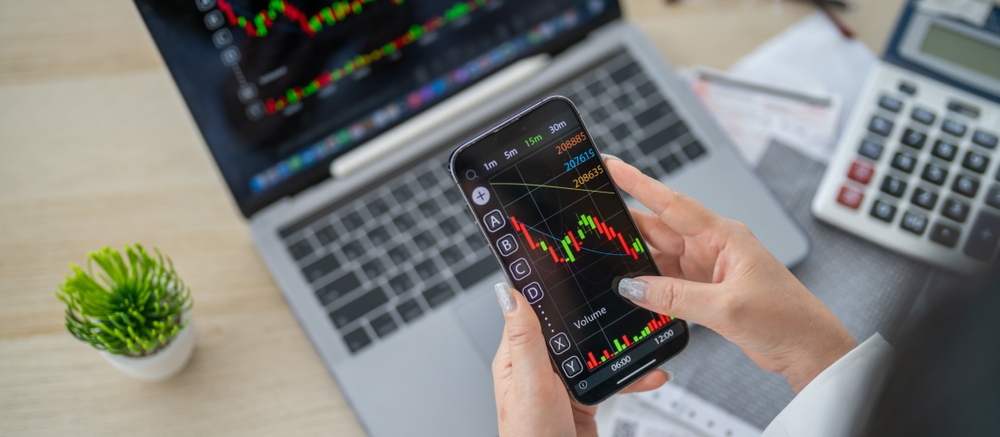
Online trading refers to buying and selling financial assets through internet-based platforms. These platforms allow market participants to view prices, study market movements, and understand how different financial instruments work.
Traditional trading often required direct communication with brokers or financial institutions. Modern online systems provide digital interfaces that let users access market information, review financial products, and monitor price changes.
How Does Online Trading Work?
Online Trading works through digital platforms that connect market participants with financial markets. A platform displays available financial instruments, market prices, historical information, and other relevant details. Transactions are generally processed through brokerage services and financial market systems.
The process includes several stages: market research, order submission, transaction processing, and account monitoring. Different platforms offer different services, fees, and features.
History of Online Trading
Financial trading originally depended heavily on physical exchanges, telephone communication, and traditional brokerage services. Market participants often needed professional assistance to access financial information and complete transactions.
Internet technology transformed the financial industry by introducing digital brokerage services and electronic market access. Over time, mobile applications, advanced charts, and automated information systems became widely available.
Popular Types of Online Trading
Online Trading covers several financial markets, including stocks, commodities, currencies, and digital assets. Each market has different characteristics, regulations, operating hours, and financial risks. Understanding these differences matters because financial instruments do not behave the same way.
Some markets involve ownership of company shares, while others involve contracts or currency exchange. Certain products use leverage, which can increase both potential gains and potential losses. Beginners should understand each financial product’s structure before considering any financial activity.
Stock Market Trading
Stock market trading involves buying and selling shares associated with publicly listed companies. A share represents a portion of ownership in a business, although its market price can change because of company performance, economic conditions, and investor expectations.
Online platforms provide information about stock prices, company announcements, financial reports, and historical performance. Understanding these resources helps readers learn how stock markets function.
Forex Trading
Forex trading involves exchanging one currency for another through the foreign exchange market. Currency prices fluctuate because of economic reports, interest rates, international trade, political developments, and changes in market demand.
The forex market operates across international financial centers and is generally active throughout the working week. Some forex products involve leverage, creating substantial financial exposure. Currency movements are difficult to predict, so market knowledge and risk awareness are essential for anyone studying this market.
Cryptocurrency Trading
Cryptocurrency trading involves digital assets that operate through blockchain networks or related technologies. Bitcoin and Ethereum are well-known examples, although thousands of other digital assets exist. Their prices can change significantly in relatively short periods.
Digital asset markets operate differently from traditional stock exchanges and may have different regulatory protections. Security problems, fraudulent projects, market manipulation, and sudden price movements create additional concerns.
Commodity Trading
Commodity trading focuses on raw materials and natural resources such as gold, silver, oil, and agricultural products. Commodity prices can change because of supply, demand, transportation costs, weather conditions, international conflicts, and industrial requirements.
Some commodity transactions involve physical products, while others use financial contracts linked to commodity prices. These contracts can be complex and may involve significant losses.
Essential Features of Online Trading Platforms
Online Trading platforms provide digital tools designed to display market information and support financial transactions. Common features include price charts, market summaries, watchlists, account information, transaction histories, and educational resources. Platform features vary by provider and market.
Some services also provide alerts, research reports, analytical indicators, and mobile notifications. These tools can help users understand market information, but they cannot predict future prices with certainty. A professional-looking interface should never replace careful research and independent evaluation.
Understanding Trading Charts
Trading charts display historical price information visually. Common examples include line charts, bar charts, and candlestick charts. Each format presents market activity differently, helping readers understand price changes across selected periods.
Charts can include additional information such as trading volume, moving averages, and technical indicators. These elements provide different perspectives on historical market behavior. However, past price patterns cannot guarantee future movements, and technical analysis always involves uncertainty.
Fundamental Analysis
Fundamental analysis examines financial, economic, and business information to understand what influences an asset’s value. For company shares, relevant information may include revenue, expenses, profits, debt, management decisions, and industry performance.
Economic indicators can also influence broader financial markets. Inflation, employment figures, interest rates, and economic growth provide useful context. Fundamental analysis helps explain why prices may change, but unexpected events can affect markets beyond what existing reports suggest.
Technical Analysis
Technical analysis focuses on historical price movements, trading volume, and chart patterns. It uses mathematical indicators and visual tools to study market behavior. Common concepts include support, resistance, moving averages, and relative strength indicators.
These methods help explain how market participants interpret historical information. However, technical indicators are not guaranteed prediction systems. Different analysts may interpret identical charts differently, so technical analysis should be understood as one research method rather than a reliable way to eliminate financial uncertainty.
Online Trading Risks
Online trading involves financial risks that can affect individuals and businesses. Asset prices may decline unexpectedly because of economic changes, company announcements, international developments, or shifts in market demand. Losses can sometimes exceed initial expectations, especially when complex financial products are involved.
Leverage, market volatility, technical problems, and poor information can create additional difficulties. Some financial products carry risks that beginners may not fully understand. Learning about these dangers is an important part of financial education and responsible decision-making.
Common Online Trading Scams
Financial scams sometimes use fake investment platforms, misleading advertisements, impersonated professionals, and unrealistic profit promises. Fraudulent operators may claim that a particular opportunity provides guaranteed returns or eliminates financial risk.
Warning signs include pressure to deposit money quickly, unclear business information, suspicious payment requests, and difficulty withdrawing funds. Independent verification of financial companies is important.
Importance of Financial Education
Financial education helps people understand financial markets, economic concepts, investment products, and personal financial responsibilities. Learning basic terminology makes it easier to recognize risks and evaluate financial information from different sources.
Educational resources can explain market structures without requiring participation in financial transactions. Students can develop useful knowledge through textbooks, classroom discussions, simulations, and supervised learning activities.
Difference Between Trading and Investing
Trading and investing are related financial activities, but their approaches can differ. Trading generally focuses on market transactions over shorter periods, while investing often involves holding financial assets longer to meet future financial objectives.
Neither approach guarantees positive results. Trading can involve frequent transactions and additional costs, while long-term investments can still lose value. Understanding their differences helps readers recognize how financial strategies, time horizons, and risk levels vary.
Read Also: Best Websites to Earn Money Online in 2026
Role of Technology in Online Trading
Technology plays an important role in modern financial markets. Computers, secure communication systems, electronic exchanges, and mobile applications allow financial information to move quickly between different market participants.
Artificial intelligence and automated systems are also becoming more common in financial services. These technologies can support data analysis and information processing, but they may contain limitations or produce inaccurate results.
Mobile Applications and Online Trading
Mobile applications give users access to financial information on smartphones and tablets. Many applications display market prices, company news, account summaries, educational materials, and transaction records in convenient digital interfaces.
Mobile technology also introduces concerns about device security and accidental transactions. Strong passwords, updated software, and careful account management help protect personal information. Users should understand the features and risks of financial applications rather than relying only on convenience.
Online Trading Regulations
Financial regulations establish rules intended to support transparent markets and protect participants. Regulatory requirements differ between countries and may cover brokerage companies, financial products, customer information, and transaction reporting.
Before using any financial service, understand whether the provider operates under appropriate authorization. Regulations do not remove every financial risk, but legitimate oversight can provide important protections.
Choosing a Reliable Trading Platform
A reliable financial platform should provide clear company information, transparent fees, appropriate regulatory details, and understandable service conditions. Also consider security standards, customer support, privacy policies, and withdrawal procedures.
Online reviews alone cannot establish whether a provider is trustworthy. Some reviews may be misleading, outdated, or sponsored. Independent verification is more useful than promotional claims, especially when financial information or personal data is involved.
Common Online Trading Mistakes
A common mistake is believing that online financial markets provide quick or guaranteed profits. Promotional content can create unrealistic expectations, especially when advertisements focus on successful outcomes without explaining possible losses.
Another mistake involves misunderstanding financial products, ignoring transaction costs, or trusting unverified information. Emotional decisions can also affect judgment. Learning about these common problems helps readers develop realistic expectations and recognize why financial knowledge matters.
Future of Online Trading
The future of Online Trading will likely involve further development in artificial intelligence, financial technology, cybersecurity, and digital payment systems. These developments may change how financial information is presented and how market services operate.
Blockchain technology and automated financial systems may also influence certain financial markets. However, technological progress does not eliminate uncertainty, fraud, or market volatility.
Frequently Asked Questions
What Is Online Trading?
Online Trading is the process of buying and selling financial assets through internet-based platforms, including stocks, currencies, commodities, and digital assets.
How Does Online Trading Work?
Online Trading uses digital platforms connected to financial markets. These platforms display market information and process financial transactions.
Is Online Trading Safe?
Online Trading involves financial risks. Safety depends on the platform, financial product, security practices, and applicable regulations.
Can Beginners Learn Online Trading?
Yes, beginners can study financial markets through educational materials, market simulations, and basic financial courses without risking real money.
What Are the Different Types of Online Trading?
Common types include stock trading, forex trading, cryptocurrency trading, and commodity trading. Each market has different features and risks.
What Is a Trading Platform?
A trading platform is digital software that provides access to financial market information, account services, charts, and transaction facilities.
What Is the Difference Between Trading and Investing?
Trading generally focuses on shorter-term market transactions, while investing usually involves holding financial assets for longer periods.
What Are the Main Risks of Online Trading?
Major risks include market volatility, financial losses, leverage, fraudulent platforms, unexpected economic changes, and cybersecurity threats.
Can Online Trading Generate Guaranteed Profits?
No. Online Trading cannot guarantee profits. Financial markets are unpredictable, and every financial product carries different levels of risk.
How Can Someone Identify Online Trading Scams?
Warning signs include guaranteed profit claims, unverified platforms, pressure to deposit money, unclear company information, and suspicious withdrawal conditions.
Conclusion
Online Trading has transformed access to financial market information through internet-based platforms and modern technology. It connects users to different financial instruments while providing tools to study prices, economic developments, and market activity.
However, accessibility should not be confused with safety or guaranteed financial success. Financial literacy requires understanding financial products, researching service providers, recognizing scams, and learning about potential losses.
